After more than 3 years of installing and using Deye hybrid inverters, it’s time for a significant update to my original Deye inverter review, including the improvements, performance, and issues I have experienced along the way.
My first review was back in 2023, after purchasing and installing a Deye SUN-8K hybrid inverter in an off-grid system. That system is still working well today, along with all the other Deye systems I have installed since then.
In fact, I have now installed dozens of Deye inverter-based systems, ranging from small grid-connected battery systems through to large off-grid installations. This includes the smaller 5kW & 6kW models, the 8kW, and the powerful 10kW & 16kW single-phase hybrid inverters, and several of the 3-phase Deye hybrid inverters. Here are some photos of some of the installations over the last few years…
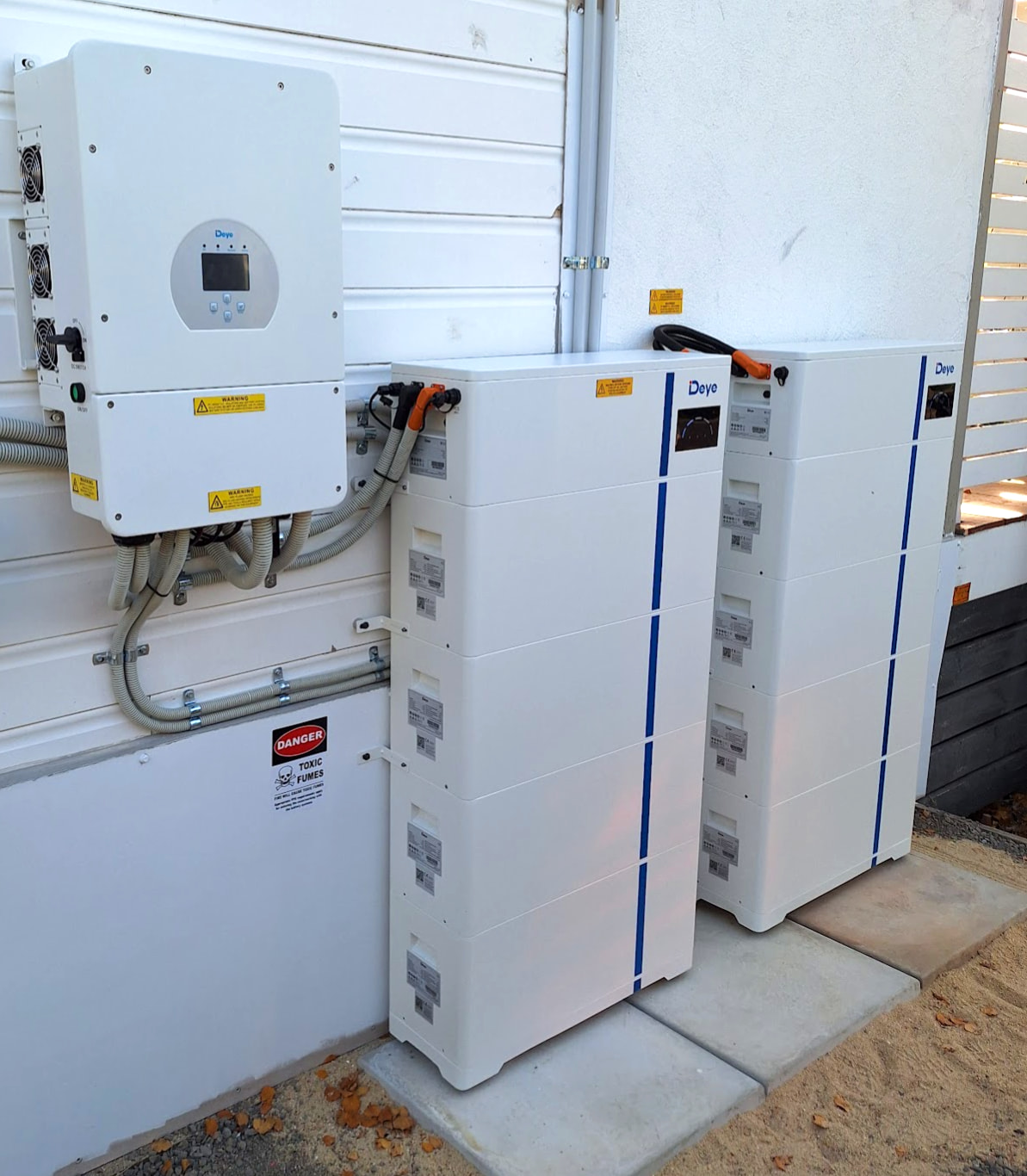
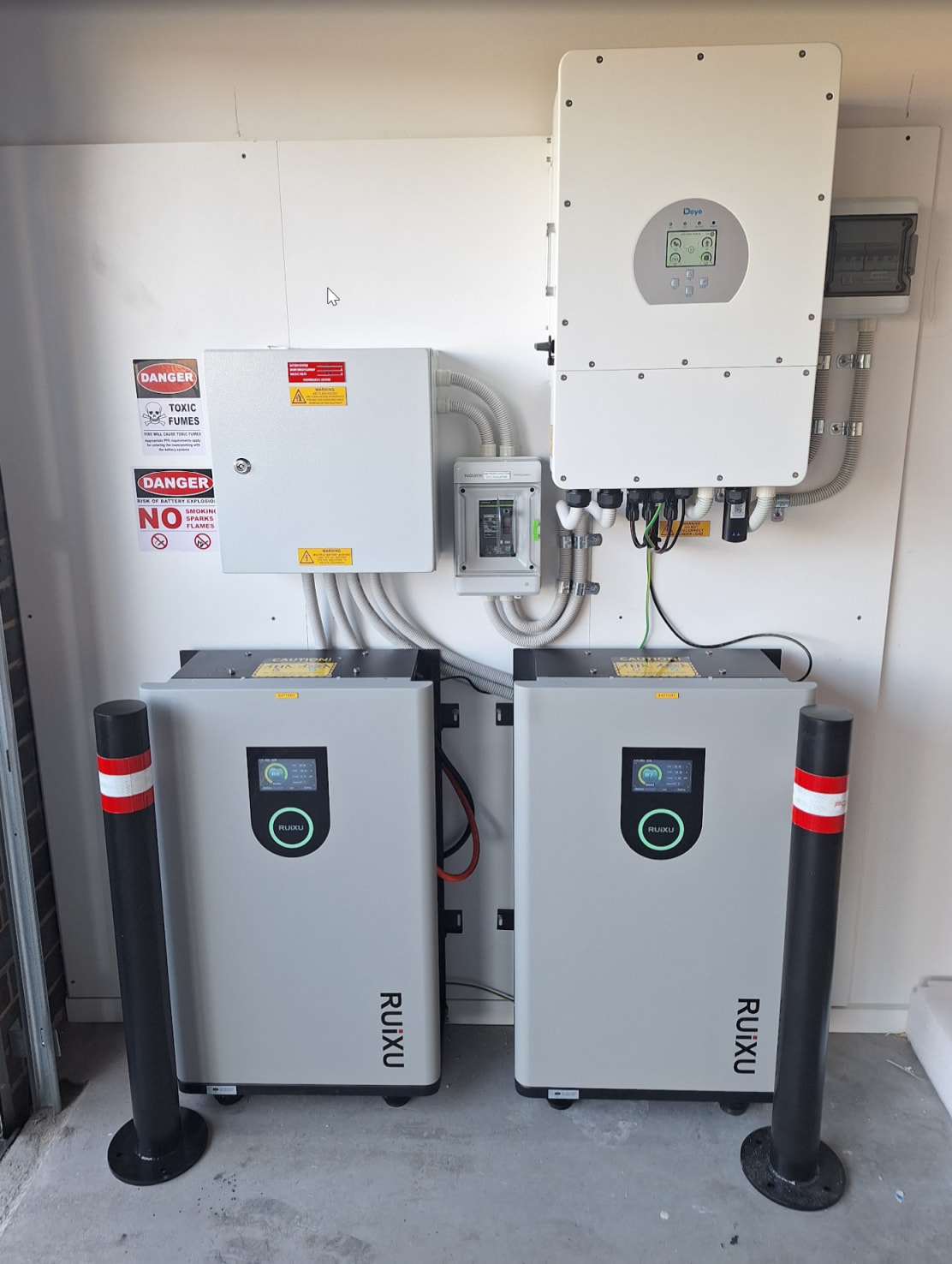
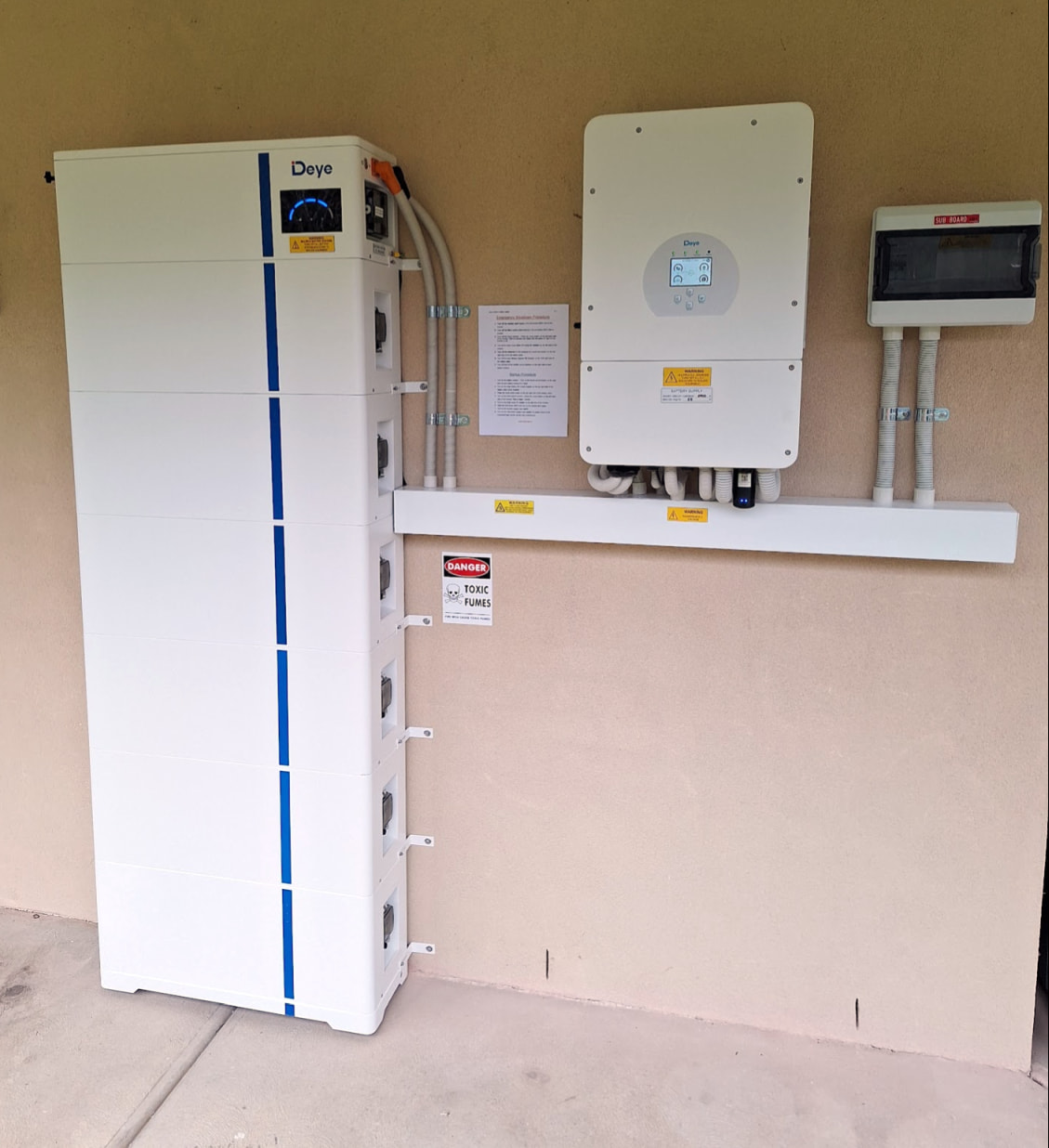
The first thing I should point out is that, incredibly, I have not had a single hardware failure of any kind with any of the Deye systems I have installed. That is probably the most important takeaway from this long-term review.
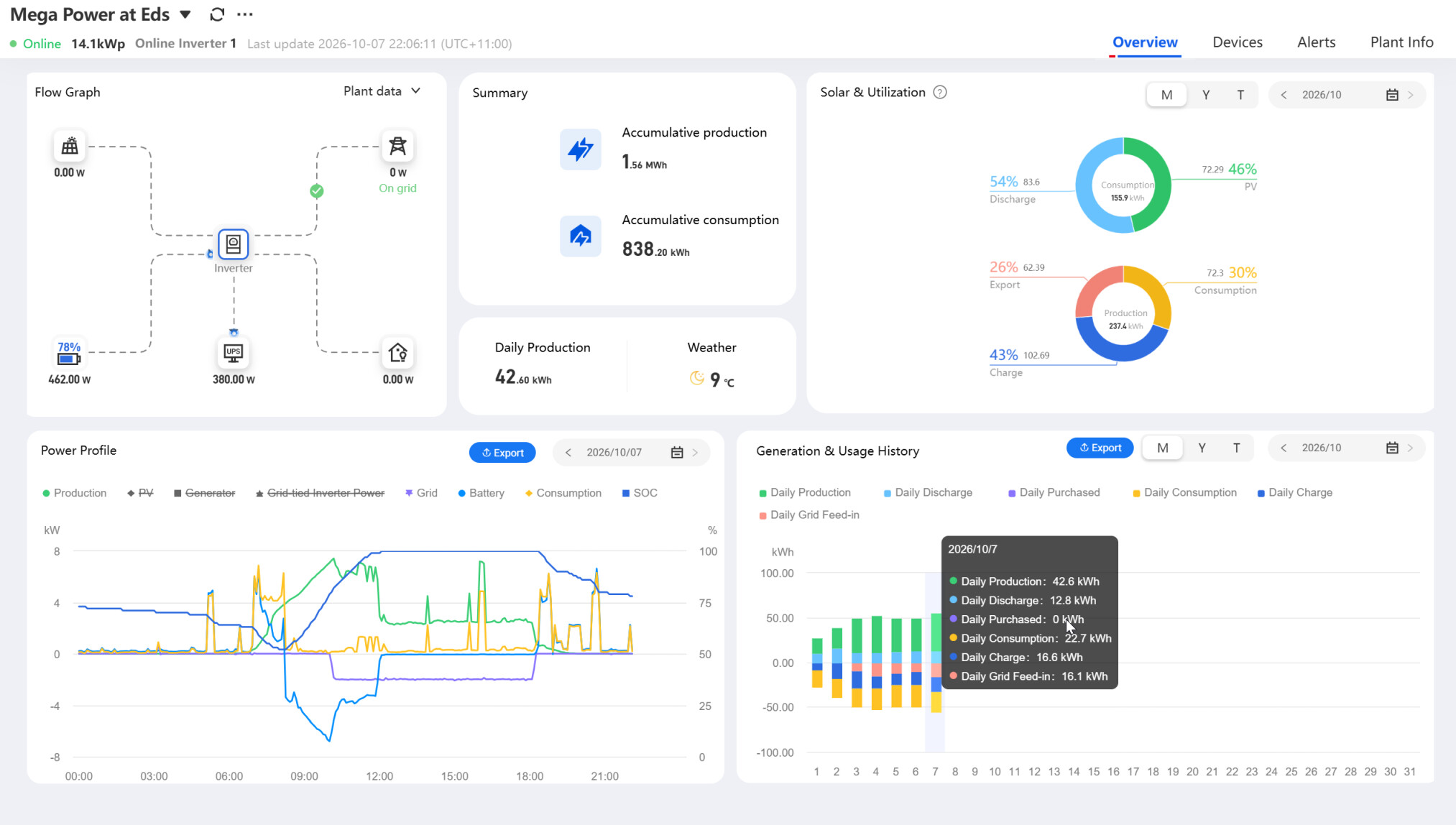
The only real issues I have experienced have been software-related, particularly with the early Solarman App, which was, to put it politely, a bit of a disaster to set up and use. Fortunately, Deye has since developed its own monitoring platform and app, and the new Deye Cloud App is now one of the best inverter monitoring and setup apps I have used.
So after dozens of installations, from small grid-connected systems through to large off-grid systems, I can say that I have had no failures and no major operational issues with the Deye inverters.
That doesn’t mean they are perfect, though.
Almost all of the systems we have installed have been in protected locations, so the inverters are generally not directly exposed to rain, snow or full sunlight. However, the summer heat here in Australia can be pretty brutal, with temperatures regularly exceeding 40°C during the day. Despite this, I haven’t had any significant issues with Deye inverters operating at high temperatures or under heavy loads.
The main downside in hot conditions is fan noise, which I’ll discuss in more detail below.
Before getting into too much detail, here are the overall pros and cons of the Deye hybrid inverters based on my experience over the last 3+ years.
Deye Hybrid Inverter Pros and Cons
Pros:
- Reliable and great performance
- Up to 200% solar oversizing – high-current MPPTs can handle almost any modern solar panel
- Easy setup and programming, once you understand the software
- Colour touchscreen is very useful for programming and monitoring
- New Deye Cloud App is fantastic for both installers and system owners
- Excellent range of inverter sizes, from small residential systems through to large 3-phase and off-grid systems
- Very flexible operating modes for hybrid and off-grid applications
- Multiple AC inputs are extremely useful for backup and off-grid applications
- Excellent battery compatibility and high battery charge/discharge power
Cons:
- Fan noise in hot conditions, particularly under high loads
- Bright green touchscreen can be surprisingly difficult to read in some conditions
- Touchscreen can be overly sensitive
- Battery cable input glands and cable holes are often too small
- Some of the software settings can be confusing until you understand how the different operating modes interact
Deye Inverter Reliability
This is probably the most important part of this updated review.
When I first reviewed the Deye SUN-8K in 2023, I was still trying to work out whether these relatively affordable all-in-one hybrid inverters could really compete with the more established off-grid inverter brands.
After more than three years and dozens of installations, I think the answer is pretty clear. Yes.
I have installed Deye inverters in a wide range of systems, from relatively small residential battery systems through to large off-grid systems. I have used different models and sizes, including the 5kW units, 8kW units, 12kW and 16kW single-phase models, as well as the larger 3-phase units.
And so far, I have not had a single hardware failure. That is a pretty impressive result considering the number of systems we have installed.
Of course, this is only my experience, and it doesn’t mean failures don’t occur. No inverter manufacturer is immune to hardware failures. But from an installer’s perspective, reliability has been excellent.
One important point is that most of our installations have been in protected locations. I would not recommend installing any inverter directly exposed to the weather if you can avoid it. Keeping an inverter out of direct sun and protected from rain and snow will improve the long-term reliability of virtually any inverter.
The Australian climate also provides a strong real-world test of thermal performance. In summer, temperatures can exceed 45°C, and some inverters have operated under heavy loads during the hottest part of the day.
Other than the increased fan noise, I haven’t experienced any significant problems with the Deye inverters in these conditions.
Solar Input and MPPT Performance
One of the things I really liked about the Deye inverter when I first reviewed it was the high solar input current.
This has become even more important over the last few years as solar panels have continued to increase in size and current output.
The Deye hybrid inverters have relatively high MPPT input current ratings, which means they can handle modern high-current solar panels without the same restrictions found on many older hybrid inverters.
The ability to oversize the solar array by up to 200% is also extremely useful, particularly for off-grid systems.
For example, an inverter with an 8kW rated output can potentially have a substantially larger solar array connected to it. This doesn’t mean you get 16kW of continuous AC output, of course. The inverter will still be limited by its AC output and battery charging capabilities, but having a much larger PV array means you can generate useful power earlier in the morning, later in the afternoon and during poor weather.
This is particularly important for off-grid systems where solar energy availability can be the limiting factor.
The high MPPT current ratings also mean you can use many of the newer high-power solar panels without having to worry about exceeding the input current limits.
Power Output and Off-Grid Performance
This was one of the areas I was most interested in when I first purchased the Deye inverter.
As I mentioned in my original review, Deye inverters are transformerless, unlike many dedicated off-grid inverters such as Victron and Schneider, which use large transformers to provide high surge capacity.
For this reason, I was initially somewhat cautious about using a Deye inverter for demanding off-grid applications. However, after using them in a large number of real-world systems, I have been very impressed with their performance. The larger Deye units are particularly impressive.
The 16kW single-phase inverter provides a huge amount of power for a single-phase residential system, while the larger 3-phase models can provide 100% unbalanced loads and even boost power on a single phase up to 50% of the total inverter rating. However, in real-world use, I have noticed they can struggle with very high single-phase loads, so it’s best to balance loads across the phases as much as possible.
For larger homes and off-grid systems, this makes the Deye platform extremely attractive.
One of the biggest advantages of the Deye architecture is that the inverter, battery charger, solar inverter and transfer/backup functions are all integrated into one unit.
As I mentioned in my original review, I am generally not a huge fan of all-in-one inverters for off-grid systems. I still think a modular system with separate components makes more sense in some situations. But after several years of using Deye in the real world, I have to admit that the all-in-one approach works very well for many residential off-grid systems, especially where space is an issue.
Setup and Programming
The Deye inverter can look quite complicated when you first start going through the menus.
There are a lot of settings, and some of the terminology isn’t always immediately obvious.
However, once you understand how the different operating modes work, the system is actually quite easy to configure.
The colour touchscreen is a big advantage here.
You can access a huge amount of information directly from the inverter, and you can configure the most important operating parameters without connecting a laptop or an app.
There is one problem with the touchscreen, though.
The bright green colour scheme is not particularly easy to read, especially in bright sunlight. The display can also be a little too sensitive, so it is possible to accidentally change screens or settings when navigating through the menus.
It isn’t a major issue, but it is something Deye could definitely improve.
Deye Cloud App
This is probably the biggest software improvement since my original review.
The early Solarman App was one of the weakest parts of the Deye experience. Getting everything connected and configured could be frustrating, and the user interface wasn’t particularly intuitive.
Thankfully, Deye has come a long way since then and the Deye Cloud App is now excellent.
For installers, it provides a much better way of monitoring multiple systems and checking inverter operation remotely. For homeowners, it provides a good overview of solar generation, battery state of charge, grid consumption, battery charging and discharging, and overall energy flows.
The initial site configuration and online setup typically takes only 4 to 6 minutes (if you have a reliable Wi-Fi connection), which is far less time than most competing brands. The big bonus is that you can configure the inverter and have it up and running immediately via the touch screen, so you can start up remote sites without phone coverage or internet.
The ability to remotely access and configure many of the inverter settings is also extremely useful when troubleshooting or making changes to an existing system.
For me, this is a huge improvement over the early Solarman experience.
Fan Noise
This is probably the biggest downside I have found with the Deye inverters.
The fans can become quite loud when the inverter is working hard, particularly in hot weather.
This isn’t necessarily a sign of a problem. The inverter is simply trying to keep the internal components within their operating temperature range.
However, if you install a Deye inverter somewhere close to a living area, bedroom or office, the fan noise is something you need to consider.
In the middle of a hot Australian summer, when the inverter is processing high PV power, charging batteries and supplying heavy loads, the fans can be quite noticeable.
This is one of the reasons I prefer to install the inverters in a garage, plant room or other protected location rather than inside the living area of a house.
Installation and Cable Entry
Another minor issue I have encountered is the size of some of the cable entry holes and glands.
The battery cable input glands can be too small, particularly when using the larger battery cables required for the higher-power Deye models.
This isn’t a major problem, but it can make installation more difficult than it needs to be. Given that some of the larger Deye inverters can handle very high battery currents, I think the cable entry points could definitely be larger.
On some models such as the 8kW, which can pass through up to 50A from the grid, the AC (grid & load) glands are far too small to fit the larger 10 or 16mm2 cable needed, so we often have to use a step drill to increase the hole size, which isn’t what I like doing on a brand new inverter.
Overall Verdict
After more than three years of installing and using Deye hybrid inverters, my opinion of the platform has changed quite a bit from my original review.
Initially, I was interested in the Deye because it offered a lot of features at a relatively low price and appeared to be one of the few affordable all-in-one inverters that could potentially work well for off-grid applications.
After dozens of installations, I think the biggest surprise has been how reliable they have been. I have installed a lot of these inverters now, in both grid-connected and off-grid systems, and I haven’t had a hardware issue or major fault.
There are still things I don’t like. The fan noise can be annoying, the touchscreen could be better, and some of the installation details could be improved.
But these are relatively minor issues compared with the overall performance and reliability.
The combination of high solar input current, large PV oversizing capability, high battery charge/discharge power, multiple operating modes and very good monitoring makes the Deye one of the most flexible hybrid inverter platforms I have worked with.
And importantly, the software experience has improved dramatically since my original review.
So after more than three years of real-world use, I now consider Deye one of the better-value hybrid inverter platforms available, particularly for residential systems and smaller- to larger-scale off-grid applications.
I’ll continue updating this review as I get more long-term experience with the newer models and firmware versions.